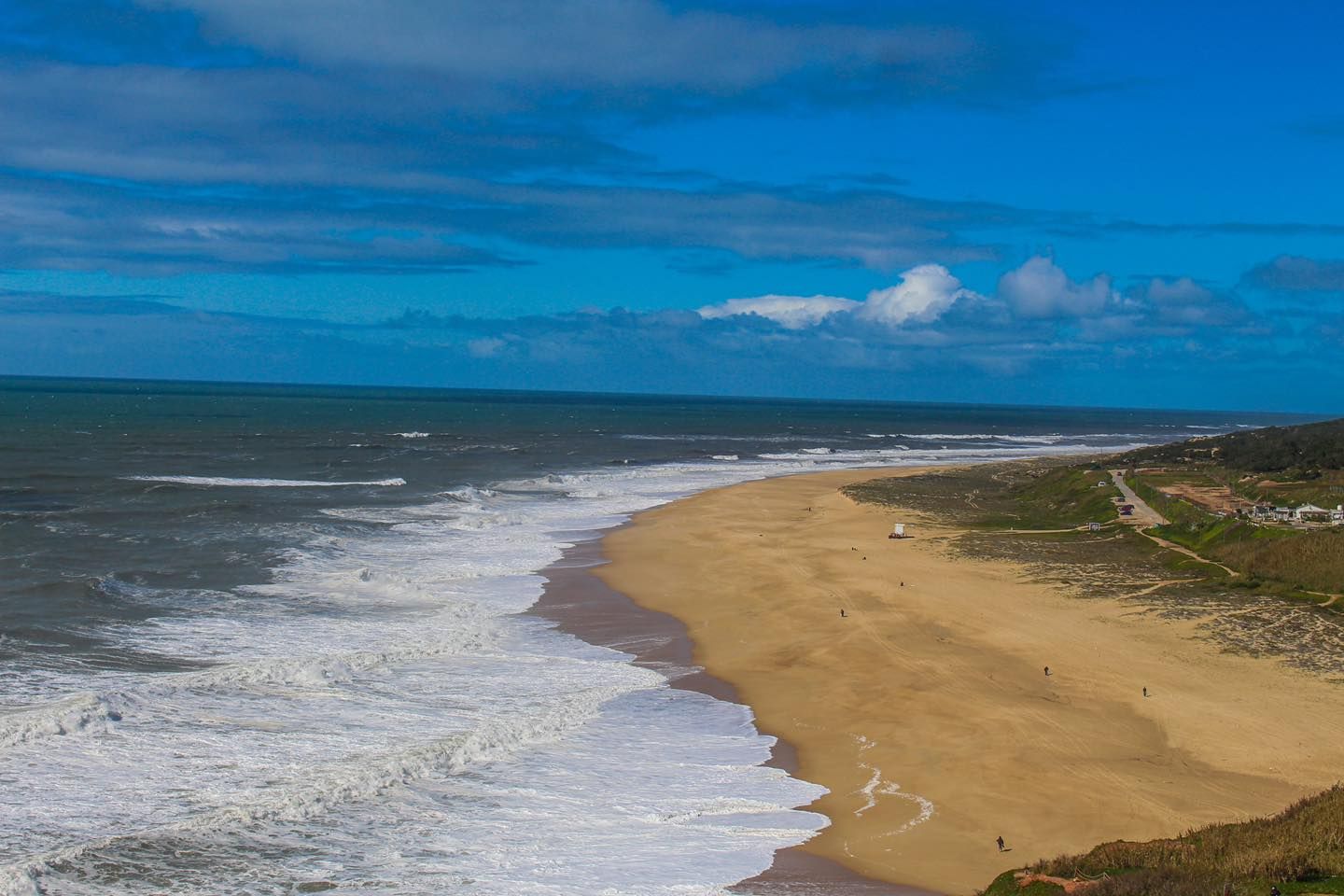
From November to February, Praia do Norte can get the biggest waves ever surfed. There is no fixed date: they show up when a North Atlantic storm sends its swell straight at Nazaré. This guide covers when to go, how to tell whether the waves are coming and where to stand to watch and photograph them.
Why Nazaré
Off Praia do Norte lies the Nazaré Canyon, an underwater gorge about 230 kilometres long that reaches depths of around 5,000 metres. The canyon carries the swell's energy almost intact to very close to the shore, where the wave suddenly grows. That is why, with the same storm, Nazaré gets much bigger waves than the rest of the Portuguese coast.
When the season is
| Months | What to expect |
|---|---|
| November to February | The best chance of giant waves. This is when North Atlantic storms are most frequent. |
| October and March | Big days are possible, but less frequent. |
| April to September | Mostly calm sea. A good time for the beach, the light and the streets. |
Even in peak season there are not giant waves every day. Weeks of ordinary sea can pass between swells. If the trip is only about the waves, keep a few days of flexibility and decide with the forecast.
The contest: Nazaré Big Wave Challenge 2026/27
Every winter the World Surf League runs the Nazaré Big Wave Challenge. For the 2026/27 season the waiting period runs from 1 November 2026 to 31 March 2027. The contest takes place on a single day, when a swell of at least 25 feet (about 7.6 metres) arrives and wind, tide and safety allow it.
- Yellow alert: issued up to 72 hours ahead, it signals that the event may be activated.
- Green alert: confirms the contest will run within the next 24 hours, as long as conditions hold.
Nine invited tow-surfing teams compete: six men's and three women's. On contest day the Forte fills up from very early.
The record
The Guinness record for the largest wave surfed belongs to Germany's Sebastian Steudtner: 26.21 metres, on 29 October 2020, at Praia do Norte. In 2024 he rode a wave measured at 28.57 metres at the same spot, which, according to available information, has not yet been ratified as a record.
How to tell whether the waves are coming
Big waves show up several days ahead in any surf forecast. These are the numbers that matter:
| Data | What you want | Why |
|---|---|---|
| Period | 13 seconds or more | The longer the period, the more energy the swell carries and the more it grows in the canyon. |
| Swell direction | West or northwest | It is the direction that runs straight up the canyon to Praia do Norte. |
| Wind | Light, from the east or southeast | Offshore wind: it cleans up the wave and lifts the spray off the crest. |
| Tide | Mid, rising | It often brings the strongest sets. |
Height alone is misleading. A 5-metre forecast with an 18-second period in Nazaré is far more than 6 metres at 10 seconds. If the period is short and the wind blows from the west, the sea will be big but messy.
Where to stand
| Spot | What it is good for | Keep in mind |
|---|---|---|
| Forte de São Miguel Arcanjo esplanade | Watching the wave break head-on, with the lighthouse in the foreground. The classic spot. | It gets packed on big days. Arrive first thing. |
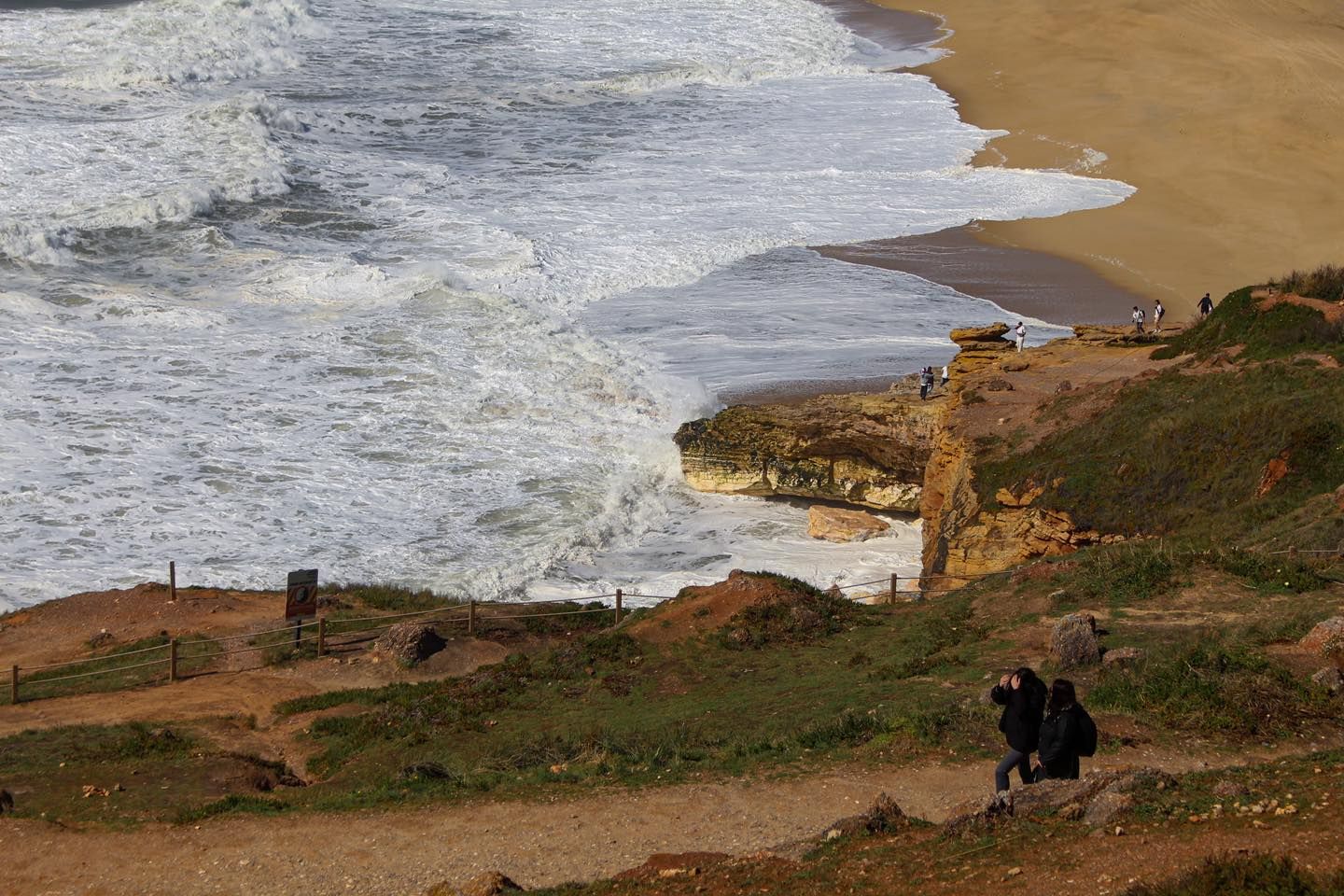
| Cliff and trail toward Praia do Norte | A side view of the wave and the scale of people against the sea. | Stay away from the edge and from closed areas. |
| Praia do Norte sand | Texture of the water and spray, at sea level. | Stay well back from the shoreline. On big days the water surges without warning. |
| Sítio and Miradouro do Suberco | An overview of the town, the beach and the Forte. | You cannot see the wave well from there, but it is good for getting your bearings and for sunset. |
Planning the day
- Arrive early. Parking near the Forte is almost impossible on big days. Many people leave the car in town, take the funicular up to the Sítio and walk from there.
- Warm clothes and rain gear. You will stand for hours in the wind, and the spray carries far.
- Patience. Big sets come now and then. Several minutes can pass between them.
- Follow local warnings. The maritime police close areas when the sea is dangerous. Respecting them is not optional.
Photographing them
- Lens: for the surfers you need a long telephoto, between 400 and 600 mm, because many waves break far out. For the scale of the place a standard zoom is enough.
- Shutter speed: 1/2000 or faster to freeze the wave and the spray. The most practical setup is manual mode with auto ISO, as explained in Camera modes.
- Exposure: white water fools the light meter. Check the histogram so you do not blow out the crest.
- Gear: bring a cloth for the front element. Salt from the spray sticks to it and ruins sharpness without showing on the screen.
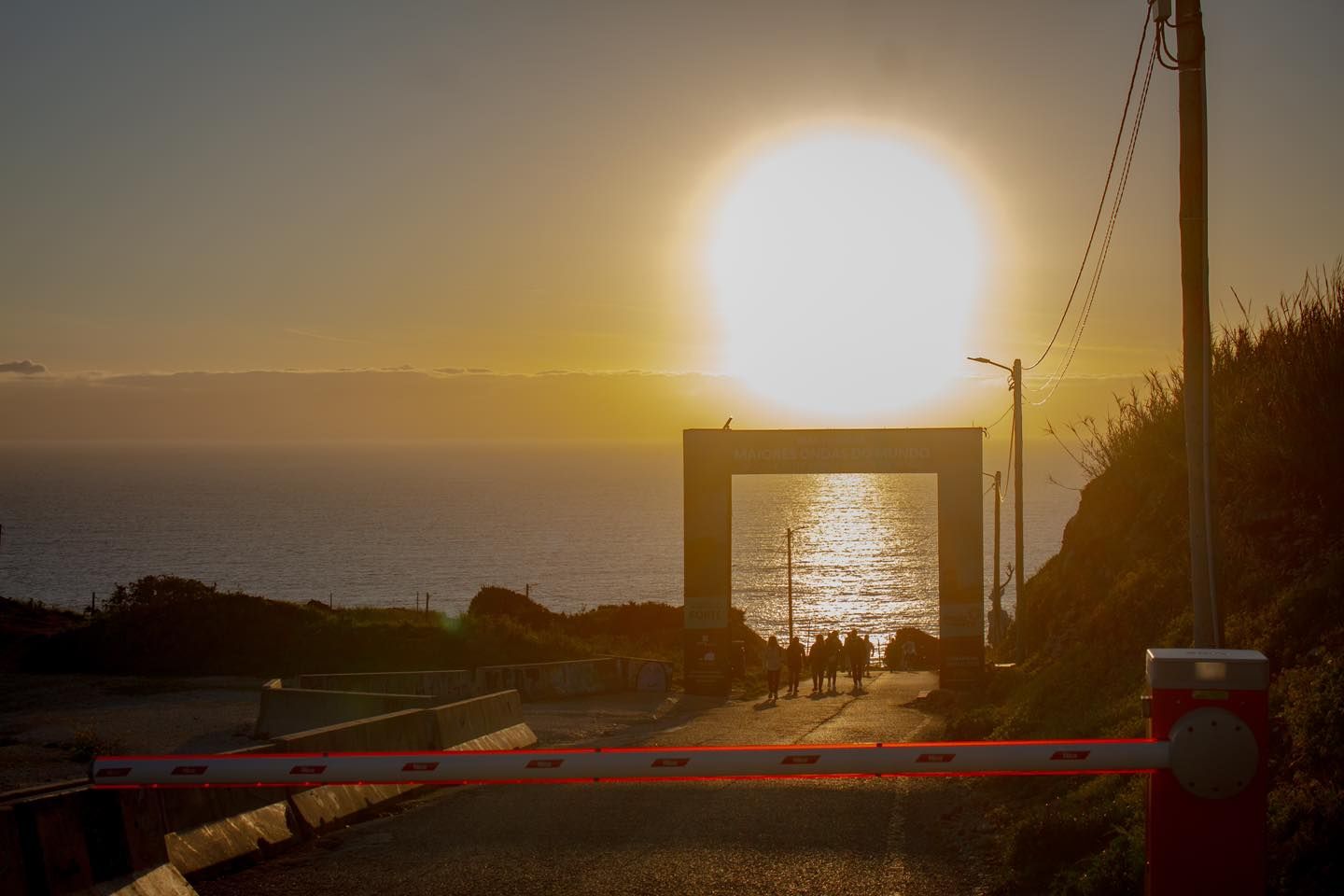
Beyond the wave, a big-sea day has other photographs: the crowd at the Forte, the jet skis, the mist over the town. Often they tell the story of the day best.
To see photographs of Nazaré and the guide to photographing it, visit the home page.